
From Warehouse to Workforce: Creating Local Impact
How remnant fabric can create opportunity beyond the supply chain
In warehouses across the UK, surplus fabric often sits quietly, unused, overlooked, and waiting for a purpose. At first glance, it’s a material problem. Excess stock. Operational inefficiency. Waste.
But look a little closer, and it becomes something else entirely. Because when remnant fabric is reimagined, it doesn’t just reduce textile waste - it can create meaningful opportunities for people.
At Remnant Revolution, this is where the story truly begins.
More Than Fabric: A Human Opportunity

Every roll of unused fabric holds potential. Not just for new products, but for new livelihoods. At the same time, something else is quietly disappearing in the UK: sewing as an everyday skill.
In 2017, a poll by the British Heart Foundation found that 59% of people are unable to sew confidently or at all, with a third saying they were never taught. Many rely on family members to make simple repairs, with 50% turning to their mothers and 16% to grandparents for help.
More recent polling by Country Living shows this decline continuing. A 2025 domestic skills survey found that only 27% of people can confidently use a sewing machine, while just 9% regularly mend clothes. In a society where fewer people can repair or create garments, the opportunity to rebuild these skills becomes even more valuable.
Creating Employment That Matters
For many women, access to flexible, fairly paid work can be limited by circumstance, whether due to caregiving responsibilities or barriers to traditional employment.
By transforming surplus fabric into products through community manufacturing, we can create ethical employment opportunities that are:
Fairly paid
Flexible and accessible
Rooted in dignity and respect
At the same time, this work helps reintroduce practical skills that are disappearing from everyday life. When sewing becomes a job, it also becomes a pathway to confidence, independence, and long-term opportunity.
Skills That Empower
The decline in sewing skills isn’t just cultural, it has real consequences. When people can’t repair clothing, items are more likely to be discarded. In fact, around 16% of people say they would replace clothing rather than fix a lost button, while many lack the skills to mend a rip or adjust garments. This contributes directly to the growing problem of textile waste.
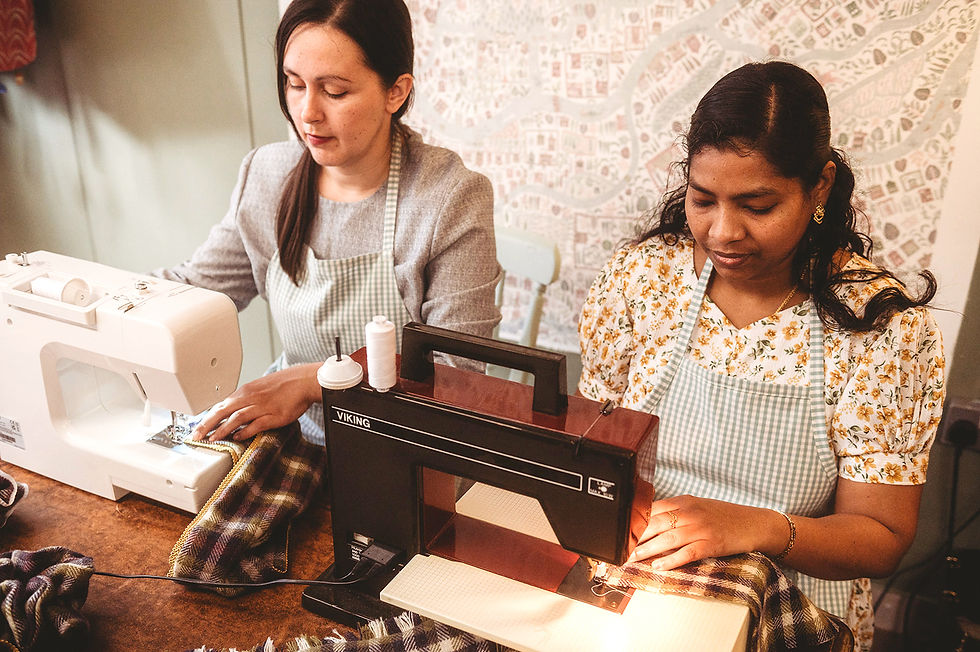
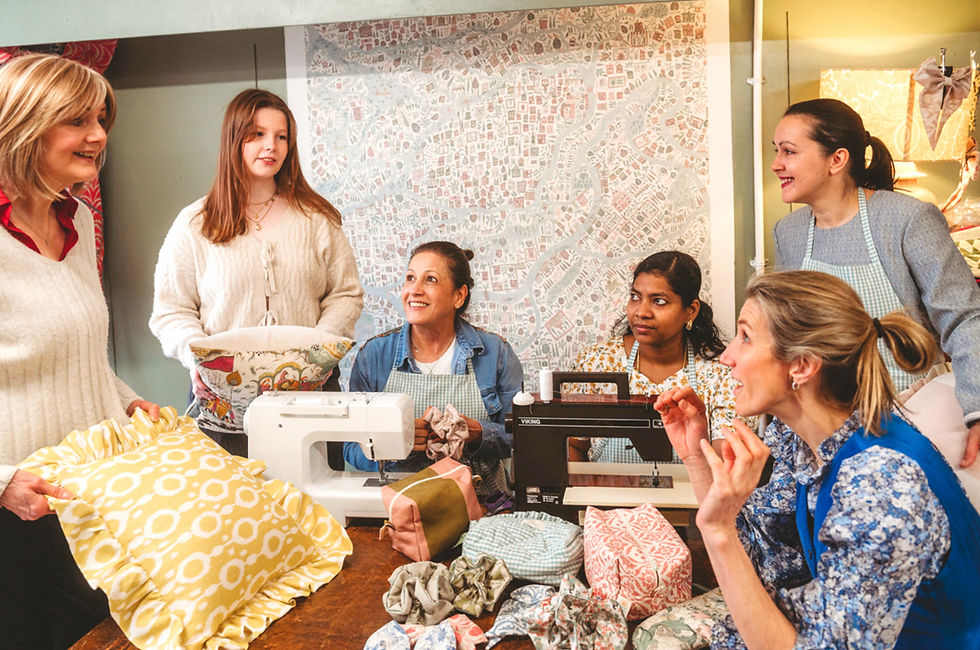
By teaching sewing and textile skills in our pop ups, and additonally by supporting local crafters, we’re not only creating products, we’re rebuilding knowledge that enables more sustainable behaviour.
Skills that allow people to:
Repair rather than replace
Create rather than consume
Extend the life of what they already own
Redefining Value in the Supply Chain
In traditional fashion systems, value is measured in volume, speed, and cost. But a different model is emerging, one that values:
People as much as products
Skills as much as scale
Community as much as efficiency
This is where social enterprise fashion plays a vital role. By connecting surplus materials with local talent, we are aiming to create a system where environmental and social impact go hand in hand.
A Model That Works for People and Planet
At Remnant Revolution, we transform surplus fabric into something far greater than products. We turn it into:
Employment for local women
Skills that empower long-term independence
A more human, transparent way of producing goods
It’s a model built on the belief that materials and people both deserve a second chance.
A Different Kind of Fashion Story
Not so long ago, sewing was part of everyday life, passed down through generations, practiced in homes, and valued as a practical skill. Today, it is becoming an endangered skill. But within that loss lies an opportunity.
From warehouse shelves to locally skilled hands.
From surplus materials to meaningfully paid work.
From forgotten fabric to renewed purpose.
Because when we rethink waste, we don’t just change the product! We rebuild skills, strengthen communities, and create impact that lasts.


Comments